Beyond the Blueprint: Beijing’s 15th Five-Year Plan and the EU
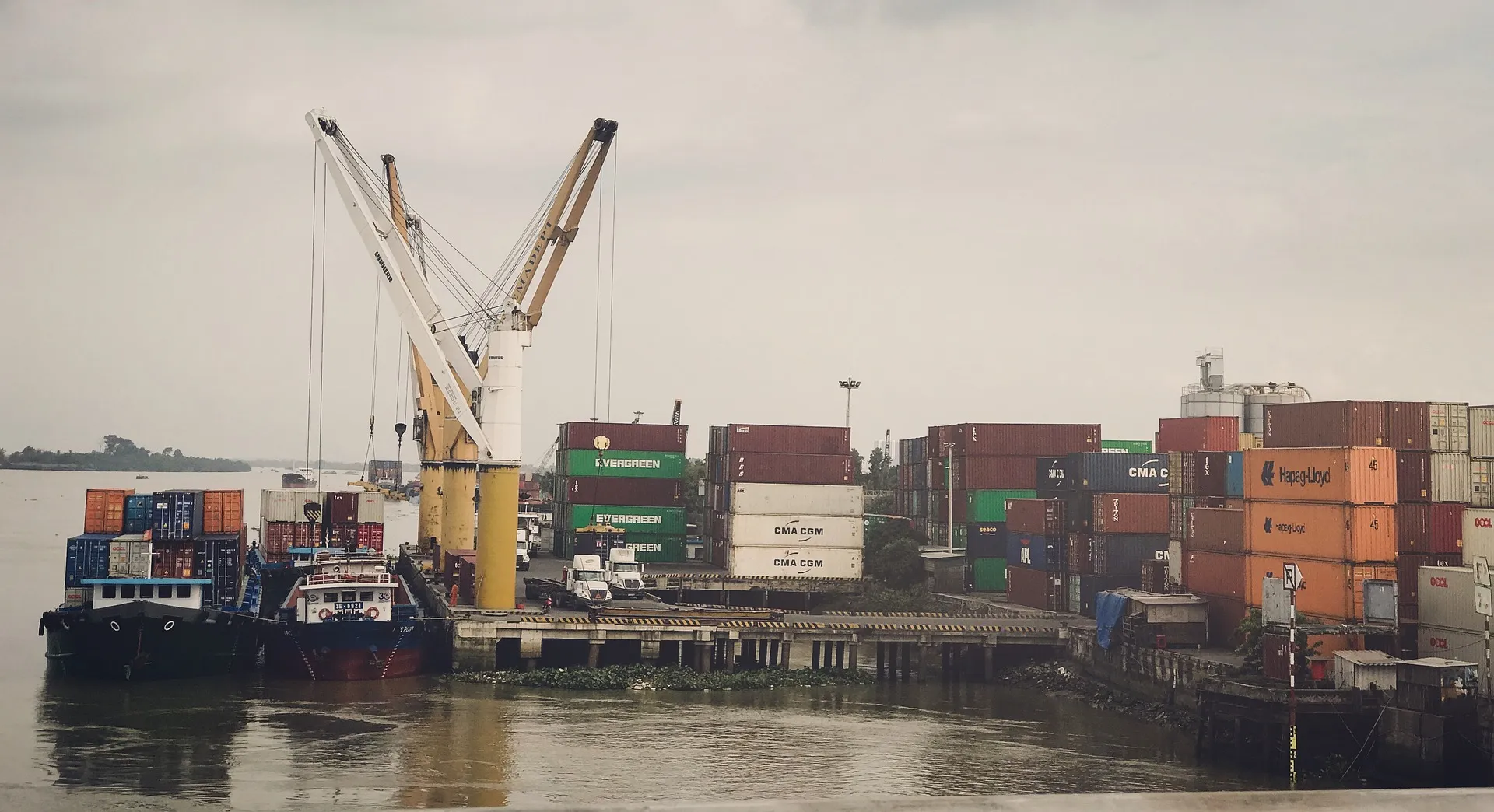
Image by Thuan Vo from Pixabay
Commentary by Daniel Balazs, Research Fellow, S. Rajaratnam School of International Studies (RSIS),
Nanyang Technological University (NTU)
April 8, 2026
China’s 15th Five-Year Plan offers a strategic opening for a more balanced partnership, particularly through its emphasis on boosting domestic consumption and expanding market access. While structural friction remains, these measures provide a foundation for both Brussels and Beijing to move toward a more sustainable, mutually beneficial economic relationship.
In March, China’s lawmakers formally approved
the outline of the 15th Five-Year
Plan
(15th FYP), a strategic blueprint that
dictates
Beijing’s policy trajectory for the rest of the decade.
Given its central role in
Chinese governance, the document carries profound implications for China’s foreign relations,
including its ties with the EU. While the 15th FYP presents new opportunities and familiar
challenges, it does not fundamentally pivot the relationship. Instead, it serves as a
catalyst, accelerating the ongoing recalibration of economic ties between Brussels and
Beijing.
The Backdrop: A Blend of Diplomacy and Friction
The 15th FYP emerges amidst a striking duality in China-EU relations. Recently, there has been
a noticeable uptick in high-level exchanges. Last year, China’s President Xi Jinping met
with the European Council President Antonio Costa and Commission President Ursula von der Leyen
in
Beijing, while Premier Li Qiang
co-chaired
the 25th China–EU Leaders’ meeting to advance bilateral ties.
This diplomatic
momentum was reinforced by recent visits from French President Emmanuel
Macron, German Chancellor Friedrich
Merz, and the Irish Prime Minister Micheal
Martin. Crucially, the 2025
lifting
of sanctions on EU lawmakers paved the way for a resumption of legislative exchanges, culminating
in a European Parliament delegation
visit
to Beijing and Shanghai this spring.
Regardless of these achievements, structural frictions persist. The EU has longstanding concerns
about what it perceives as market
distortion
caused by certain aspects of Chinese economic policy, such as subsidies, institutionalised preferences
in public procurement, overproduction, and a heavy reliance on exports for growth. In the European
reading, these policies fuel an imbalanced economic relationship characterised by a trade surplus,
skewed
investment flows, and nonreciprocal market access that erodes European industrial competitiveness.
Added to this is the EU’s strategic
dependence
on rare-earth elements from China, compounded by Beijing’s related export control
measures.
To address these vulnerabilities, Brussels is pursuing its economic
de-risking
agenda. This includes
stringent
anti-dumping and anti-subsidy
tariffs—notably on China-made
electric vehicles—and foreign subsidy investigations into projects like the BYD
plant
in Hungary or CRRC’s railway
tender
in Portugal.
China, however, views the relationship through a different prism. In
March 2026, Foreign Minister Wang Yi
maintained
that between Beijing and Brussels, “interdependence is not a risk; intertwined interests are not
threats; and openness and cooperation will not weaken economic security”.
Consequently, Beijing has criticised certain EU de-risking measures as
unfair
and
discriminatory. Furthermore, China has economic measures in place that disadvantage some European firms in
their China-related operations. For instance, Beijing imposed anti-dumping and anti-subsidy
tariffs on EU products, including
dairy,
brandy, and
pork. At the same time, European telecom firms
face
national security reviews in China, reportedly placing them at a disadvantage relative to domestic
competitors.
The picture that emerges is one of ongoing recalibration. Brussels is
modernising its industrial base and diversifying partnerships to reduce dependencies, while
Beijing pursues growth on its own terms, seeking to keep the door to Europe open. The 15th FYP
must be evaluated against this complex, competitive reality.
The 15th FYP: Consumption, Openness, and the Drive for Self-Sufficiency
The 15th FYP reflects a resolute policy commitment to rebalancing growth towards domestic
consumption. By elevating household demand as a key driver of growth, Beijing aims to anchor
economic development in higher incomes, sturdier employment, and reinforced social safety
nets.
Simultaneously, the plan signals a calibrated shift in China’s external
economic strategy, emphasising better coordination between imports and exports to achieve more
sustainable trade. Notably, the push to expand imports reveals a recognition that external
supply is important for fuelling domestic upgrading.
The document further pledges
to broaden market openness, in alignment with international economic practices. It prioritises
greater access in services sectors such as telecommunications, healthcare, and education,
alongside further reductions to the foreign investment negative list.
Moreover, the
document places strong emphasis on technological self-sufficiency as a prominent element of
economic strategy. It prioritises breakthroughs in critical technologies — including
semiconductors, artificial intelligence, quantum computing, and advanced manufacturing. This
is complemented by large-scale investment in digital infrastructure, clean energy systems, and
innovation ecosystems. These measures reflect a comprehensive effort to strengthen domestic
innovation capacity, reduce external dependencies, and position China at the forefront of
next-generation technological and industrial development.
The Road Ahead: Selective Engagement, Sticky Challenges
Overall, the 15th FYP signals selective opportunities for China-EU economic engagement. The
pivot toward domestic consumption is likely to resonate with Brussels, echoing Commission
President von der Leyen’s calls
for Beijing to bolster local demand. This shift — particularly in services such as healthcare,
tourism, and elderly care — could create openings for European firms with proven expertise in high-quality
service provision.
In the same vein, China’s stated goal to
expand
imports could theoretically address European leaders’
concerns
about Beijing’s
skewed
trade
ties
with the EU. Furthermore, a commitment to openness could alleviate the lack of market access, a
longstanding
sore
point in bilateral ties.
However, these prospects are tempered by significant
challenges. Beijing’s policies to coordinate trade flows and expand imports appear closely
tied
to domestic upgrading rather than a fundamental
shift away from export-oriented growth. Coupled with a continued emphasis on technological self-sufficiency
and state- backed industrial development, these priorities are likely to sustain existing frictions
surrounding surplus production and trade imbalances.
Toward a New Economic Equilibrium
Ultimately, the provisions of the 15th FYP do not signal a fundamental pivot in EU- China
relations. Instead, they are more likely to act as an accelerant for the recalibration already
underway. The emerging result of this process is an economic relationship reconstructed on new
foundations: reduced dependence, selective engagement, and a strategic diversification of
partnerships.
This shift does not necessarily foretell a better or worse future for
EU-China ties; rather, it implies a different one. If both sides can successfully navigate
this transition by respecting each other’s strategic sensitivities while leveraging their
economic complementarities, the long-standing "win-win" rhetoric could evolve into a
mutually beneficial reality.
It is a long and winding road, but in an era of global
fragmentation, it is a journey worth pursuing.
Please note that views expressed by the author do not reflect the policies or positions of ICES.
The views expressed by the author are personal and do not reflect the policies or
positions of his affiliated institutions.