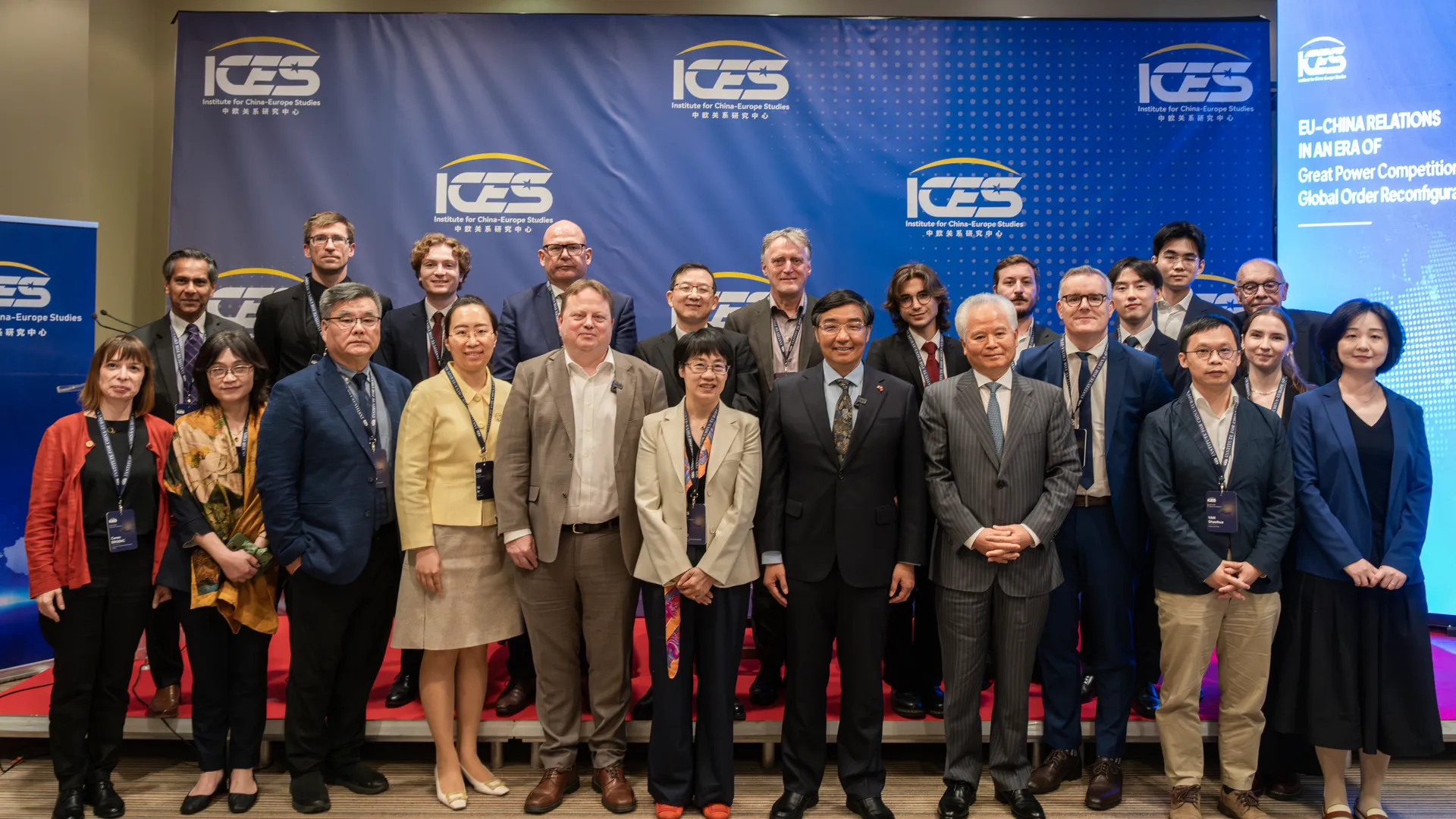
EU-China Relations in an Era of
Great Power Competition
& Global Order Reconfiguration
Date
10–11 June 2026
09:00 – 14:00
Venue
Amigo Hotel, Brussels
Ambassador A&B
Organised by
ICES, ISDP, NISCSS, ICAS
Conference Sessions
Welcoming Remarks & Keynote Addresses
The keynote speeches pointed out that EU-China relations evolve in a turbulent era of great power competition and transatlantic shifts. Wu Shicun, Board Director of ICES, warned against the 'excessive securitisation' of economic ties, which risks turning prudent de-risking into a self-fulfilling prophecy of confrontation. He emphasised that as two of the world's largest economies, China and a strategically autonomous EU have a shared global responsibility to preserve multilateralism and rebuild strategic trust through candid Track 2 dialogue. Joanna Szychowska, Director Asia, Services and Investment, DG Trade, European Commission, clarified that Brussels seeks a balanced relationship but faces severe structural asymmetries. She stressed that the EU's concerns stem not from the trade deficit itself, but from its root causes: China's production-heavy economic model, growing market barriers, and industrial overcapacity. While reaffirming the EU's commitment to engagement over decoupling, she concluded that dialogue must yield concrete results, asserting that it takes two to ensure fair competition.
Beyond De-risking: Toward a Resilient Framework for EU-China Economic Relations
This panel examined the shifting paradigms of EU-China economic relations, focusing on how to navigate structural asymmetries without resorting to reactive crisis management. Dr. Ceren Ergenc (CEPS) argued that trade frictions also include a technological and regulatory mismatch rooted in divergent industrial policies, recommending a bottom-up approach with local committees and technology co-production to prevent commercial issues from escalating into macro-political disputes. Cui Hongjian (Beijing Foreign Studies University) cautioned against securitisation, noting that political and strategic anxieties might threaten WTO guidelines. Dr. Jin Ling (CIIS) underscored that tit-for-tat actions will only bring mutually assured economic damage, noting that with nearly 70% of European companies expanding operations in China, entrepreneurs are acting as the most realistic politicians. Dr. Tim Rühlig (EUISS) observed that Beijing faces an aging society, low consumer confidence, and diminishing returns on infrastructure, making a rapid shift away from its export-driven economic model costly and difficult to execute overnight.
The Third Variable: Dynamics and Trade-offs of EU-China-US Relations
This panel focused on the trilateral dynamics and trade-offs in the EU-China-US relationship. Dr. Anatol Lieven (Quincy Institute) argued that Europe should base its China policy on its own interests rather than American agendas, criticising 'de-risking' for implying that economic defences result from Chinese military coercion and warning that blind alignment with the US against China risks solidifying the Moscow-Beijing axis. Dr. Yu Jie (Chatham House) observed that a 'cold peace' between Washington and Beijing is necessary to protect the global economy and should set an example for Brussels and Beijing. Dr. André Härtel (SWP) noted that the EU is not a traditional superpower but a conglomerate of 27 countries still building its strategic actorness, stressing that member state unity is necessary for collective bargaining. Yan Shaohua (Fudan University) pointed out that as long as Brussels and Beijing do not view each other as existential security threats, all economic frictions remain manageable through strategic patience and a new global grand bargain.
Diplomatic Perspectives: A Conversation with Ambassador FEI Shengchao
Chaired by Dr. Fabian Zuleeg (European Policy Centre), the luncheon discussion featured an exchange on the 'friend or foe' narrative, trade imbalances, and the contested concept of overcapacity. Ambassador Fei Shengchao (Embassy of the PRC to Belgium) challenged the European perception that China acts as a rival, pointing to media stereotypes and arguing that a strong European Union is in China's strategic interest. He refuted allegations that China's market share is unfairly driven by state subsidies and emphasised that the Chinese economy is transitioning into a consumer market. Dr. Zuleeg centred the European perspective on the rules-based international order, noting that its erosion creates friction and that the discussion of a 'China Shock' illustrates a persistent economic pressure on domestic industries. Both speakers ultimately agreed that escalating tariff wars serve no one's interest, concluding that Brussels and Beijing should seek pragmatic solutions through diplomacy.
Shared Horizons: Managing EU-China Ties through Ocean Stewardship
Framing the Future: How Narratives Define the EU-China Dialogue
Photo Gallery
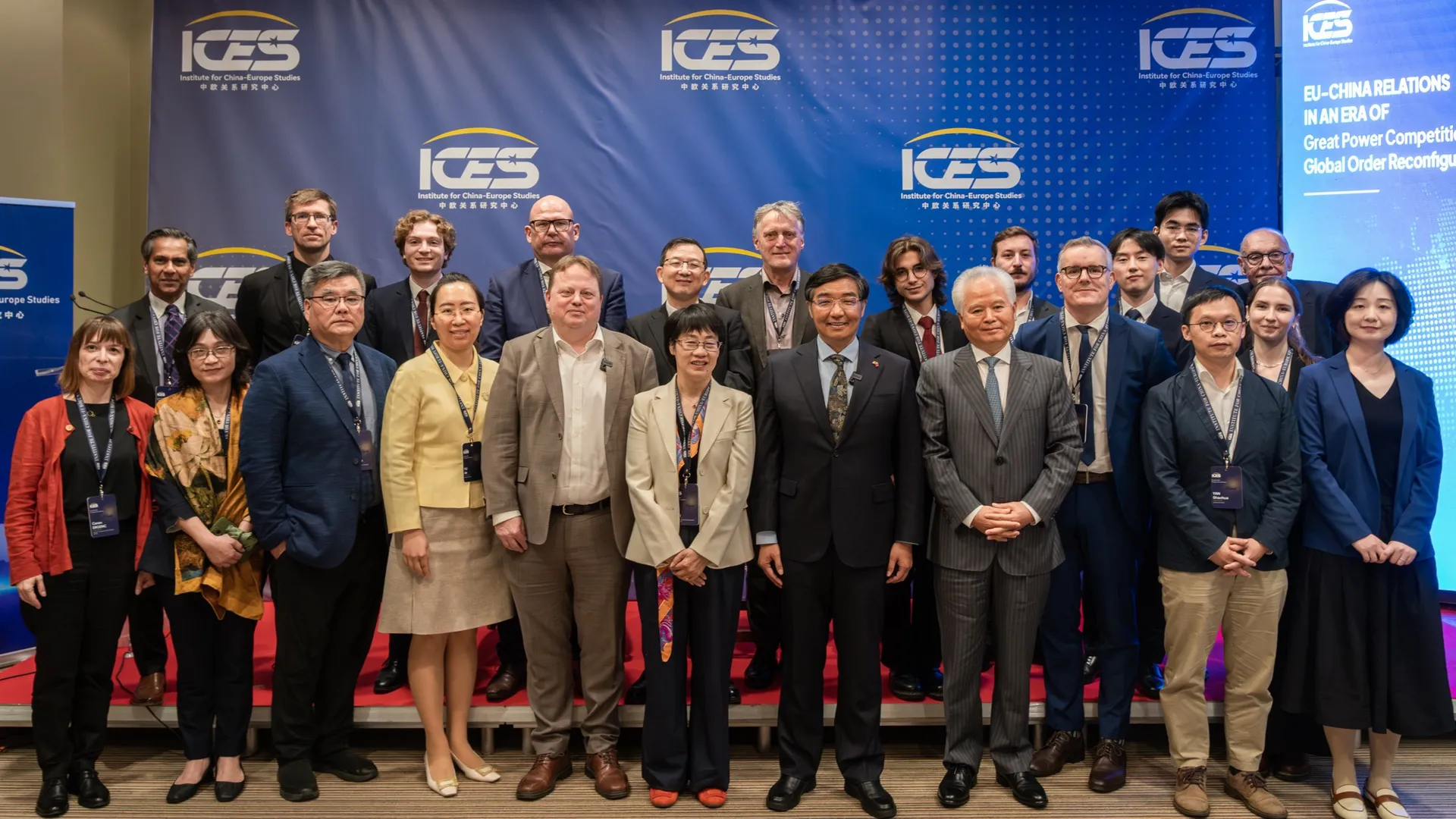
Group picture — Open Conference
1 / 22
For any questions regarding this conference, contact us at info@ices-eu.org.
Read Press Release