The EU’s new Arctic Strategy and China’s Polar Silk Road: Stakes and Realities in the High North
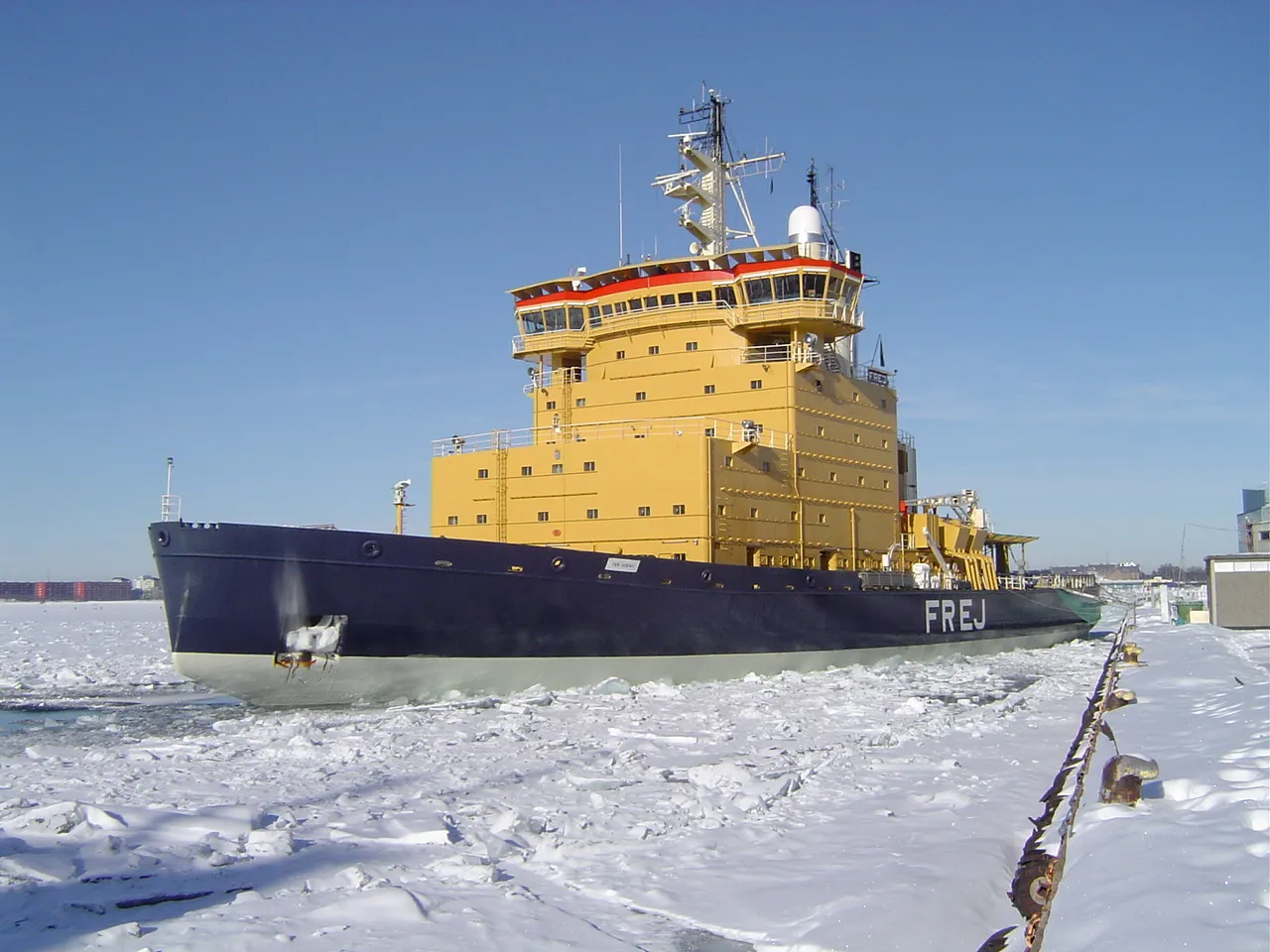
Image: By Marcusroos - Own work, CC BY-SA 3.0
Commentary by Pacôme Ducorail, Research Assistant, ICES
October 29, 2026
On 20 October 2026, the European Commission launched a new Arctic Strategy framing the region as its 'Northern neighbourhood.' Facing rising military activity from Russia and the US, the EU aims to expand icebreaker capacity, enhance maritime security, and build the Pan-Arctic undersea cable. Parallelly, China has been pushing its commercial ambitions along the Northern Sea Route, as part of its Polar Silk Road. However, severe climate conditions, high costs, and geopolitical friction present major obstacles for both powers.
On 20 October 2026, the European Commission released its new Arctic strategy to address new geopolitical, environmental, and security concerns in the area. The previous Arctic Policy dated back to 2021, but a recent increase in both Russian and American military interest in the region was followed by renewed EU attention to the region.
The EU’s Arctic push comes just months after China launched a regular commercial cargo transit service through the Arctic. While Brussels and Beijing share overlapping interests in the area, challenges stemming from the terrain and geopolitics may hinder their ambitions and cooperation in the region.
In a symbolic shift, the EU now frames the Arctic as its 'Northern neighborhood', a clear assertion of the 27-member bloc's strategic interest in the region. Among the flagship measures announced in the new Arctic strategy were expanding icebreaker capacity, using the ‘EU Industrial Maritime Value Chains Alliance’ to map needs and capabilities, and future joint procurement and pooling financing options for future icebreaker ships. Furthermore, there are plans of a Maritime Security Hub to share and coordinate information sharing across EU sources and allied countries to provide further monitoring of illegal fishing, shadow fleets, and submarine cables in the region. Undersea connectivity is another key part of the new strategy with the upcoming Pan-Arctic Cable project, a ‘sovereign, secure, and resilient submarine cable connection linking Greenland directly to the EU’ that could eventually be extended to Canada and Japan. The EU also announced plans to extend connectivity services in the region with IRIS² (Infrastructure for Resilience, Interconnectivity and Security by Satellite), satellite surveillance with Destination Earth, launch a foresight study on Arctic shipping routes, continue fostering scientific research, and support local populations’ participation in decision-making processes.
China has also expressed strong interest in the Arctic. In August this year, it announced the launch of a regular commercial cargo transit service through the Northern Sea Route and the shipping company Sea Legend to build on Chinese President Xi Jinping’s 2017 announcement of a Polar Silk Road. The Northern Sea Route (NSR) connects Asia to Europe through the Arctic and, importantly, largely by what Russia considers and asserts as its territorial waters rather than as an open international route where freedom of navigation would apply. Compared to other routes, including the Suez Canal, the NSR can cut transport time up to half from China to Europe. It is, however, fraught with regulatory, environmental and meteorological hazards, which have led experts to doubt its supposed potential as a clear alternative. That has not stopped Beijing from reinforcing its cooperation with Russia in the region in an incremental and project-driven manner.
These parallel ambitions are the manifestation of a more global context, from the war in Iran and the unstable sea traffic in the Strait of Hormuz, climate change making the Arctic easier to navigate in due to melting ice caps, to geopolitical tensions as Russia and the United States increase their military activities in the region. What is more, following President Trump’s renewed call for Greenland annexation, an agreement was eventually found between the United States, Greenland, and Denmark allowing for increased American security deployment. NATO also explicitly notes the mounting military operations in the region, and military operations trackers show regular NATO and Russian exercises taking place, the latest being on 15 October 2026. It makes sense, then, that both Brussels and Beijing would try to safeguard their own interests in the region, from subsea cables and dual-use ships to commercial lines that might act as reliable alternatives to conflict-affected ones.
Both projects, however, face strong limitations and might, in the long run, hamper EU-China cooperation to varying degrees.
On the European side, while the EU’s main strength in the region lies in its icebreaker ship expertise among its Member States (Finland, Sweden and to a lesser extent Germany), the 27-nation bloc suffers from a clear lack of coordination and capacity. Out of the 240 icebreakers in the world, EU states only operate around 10, some of which are not adapted to operations in the Arctic. In comparison, Russia has 40, China 5, including 1 nuclear-powered, and the United States 3, but is on its way to building 11 medium ones. That is not to say the EU has no leverage; indeed, 60% of icebreakers in the world were built by Finland, meaning the United States largely depends on the EU for its announced plans of further construction, something EU Commission President Ursula von der Leyen has explicitly said could be leveraged. Yet, despite the EU's expressed willingness in its last Industrial Maritime Strategy to have better aggregated pipelines of public orders, member states still compete to have construction on their national soil, and cooperation is often lacklustre in the absence of binding legal requirements. Similarly, and on subsea cables, the strategic advantages from the Arctic to host submarine cables are established on sovereignty and reduced latency grounds, but the sheer costs associated with them combined to incredibly complicated local environmental conditions make finding investors a titanic task.
When it comes to China’s interest in the NSR, several obstacles are to be noted as well. First, the extreme Arctic meteorological conditions and ice hazards make any type of shipping risky, liable to delays and accidents, and require powerful (and costly) icebreakers, on top of a very limited window of usability (from mid-summer to mid-autumn), even if this one has been extended by global warming. Second, using the NSR involves abiding by Russian regulatory practices, including permits, and associated fees. In the midst of the war in Ukraine, these conditions are very likely to limit any interest in European cooperation, as it would be politically costly to work with ships that accepted those conditions and could lead to secondary sanctions on Chinese entities from the EU. Increased passage in the area would also create additional strain on local and fragile ecosystems, already at risk by deep-sea mining projects and fossil fuel extraction.
While the ‘great game’ of the Arctic has already started, both the EU’s and China’s recent plans in the regions will be challenging to carry out and will not only depend on each actors’ capabilities and long-term strategy, but also external factors beyond their control, from environmental hazards to international conflicts. What is more, both projects might increase mutual distrust in their own ways, as China has already criticised the EU’s ‘Cold War mentality’ following the announcement of the 2026 Arctic Strategy, and the NSR’s political costs owing to its Russian component might bear heavy on EU-China’s somewhat fragile relationship.
Please note that views expressed by the author do not reflect the policies or positions of ICES. The views expressed by the author are personal and do not reflect the policies or positions of his affiliated institutions.